Metal roof vs membrane roof: how to tell them apart in aerial imagery
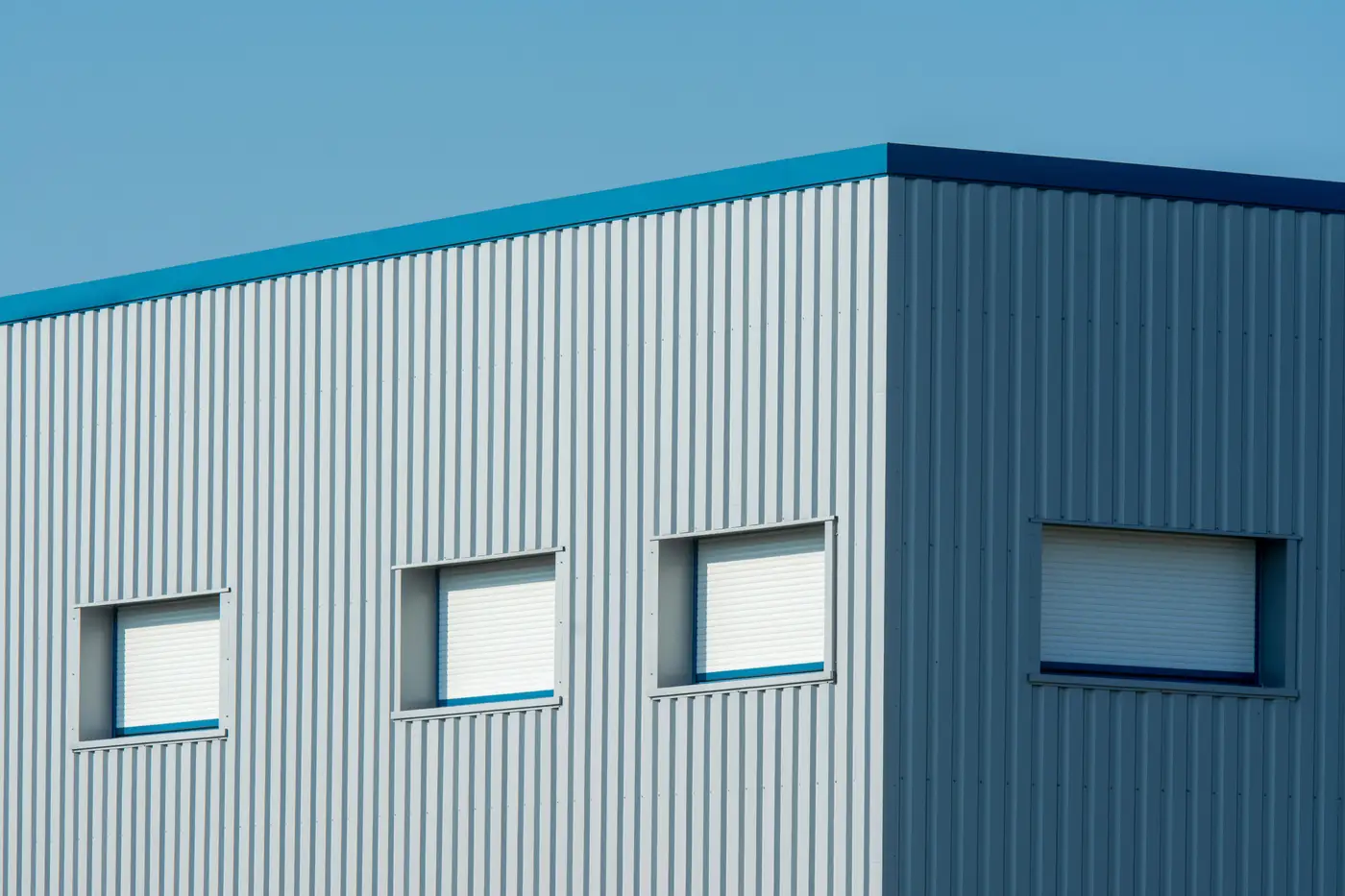
On a commercial property application, "roof type" is often a single field with a dropdown: metal, membrane, shingle, tile, other. The applicant or their broker picks one and moves on. From ground level, or from a phone photo snapped during a walk-around, metal and membrane roofs can look similar enough that the wrong box gets checked, especially on low-slope buildings where the roof edge is about all anyone sees from the parking lot.
In imagery captured from above, at a resolution fine enough to resolve individual panel seams, the two materials read very differently. Knowing what to look for turns a guess on the application into something you can confirm before binding.
What standing-seam metal roofing actually looks like from above
Standing-seam metal is laid in long, parallel panels, usually 12 to 24 inches wide, running ridge to eave or across the roof plane in one direction. At sub-half-meter resolution, those seams show up as a regular, almost ruled-paper pattern of fine parallel lines. The spacing stays consistent across the whole roof plane because the panels are fabricated to a fixed width. Corrugated or ribbed metal panels, common on pole barns, ag buildings, and older light-industrial stock, carry the same parallel-line signature but with a tighter, more textured repeat.
Color helps too. Painted metal roofs tend to read as a flat, uniform color field cut by the seam lines, with visible fastener rows where the system is exposed-fastener. Standing seam has no visible fasteners at all, since the clips sit hidden under the seam, so the surface looks cleaner and the lines read sharper and more precise.
What gives away a TPO or membrane roof
Single-ply membrane, TPO, PVC, EPDM, goes down differently. It's rolled out in wide sheets, typically 10 feet across, and heat-welded or adhered at the seams. From above that produces a much coarser pattern: wide, faint seam lines spaced far apart, sometimes barely visible on a well-installed white TPO roof. Instead of a ruled pattern you're looking at a mostly featureless field broken up by rooftop equipment, drains, pipe boots, and patch work from old repairs.
Ballasted membrane systems complicate the call. A gravel-ballasted EPDM roof can look almost like aggregate or built-up roofing from above, with no seam pattern visible at all because the membrane itself is buried under stone. That one is genuinely harder to call from imagery alone, and it's worth flagging as uncertain rather than guessing.
Why this matters before you bind
Roof covering material drives more than a premium line item. It affects wind and hail loss expectations, fire class, and expected service life, and it shapes how a claim gets adjusted after a storm. A membrane roof mislabeled as metal on the application doesn't just mean the wrong rate on file. It can mean an adjuster showing up expecting standing seam and finding 25-year-old TPO with visible seam lift, which is a different conversation entirely about condition and remaining useful life.
Rooftop equipment count is its own tell. Metal roofs, especially on ag and light-industrial buildings, often carry less rooftop HVAC than a commercial TPO roof over a retail box or office building, where you'll typically see a cluster of condensing units, curbs, and roof penetrations punched through the membrane. That pattern, equipment density next to seam texture, is usually enough to separate the two without anyone stepping on a ladder.
None of this requires sending a roofer out before you quote the account. Property Characteristics pulls annual VHR satellite and aerial imagery down to sub-half-meter resolution and reads the roof geometry, material signature, and visible site features for a given address, so the file in front of the underwriter reflects what the roof looks like rather than what got typed into the application.
Run the address through before the next low-slope commercial risk crosses your desk.